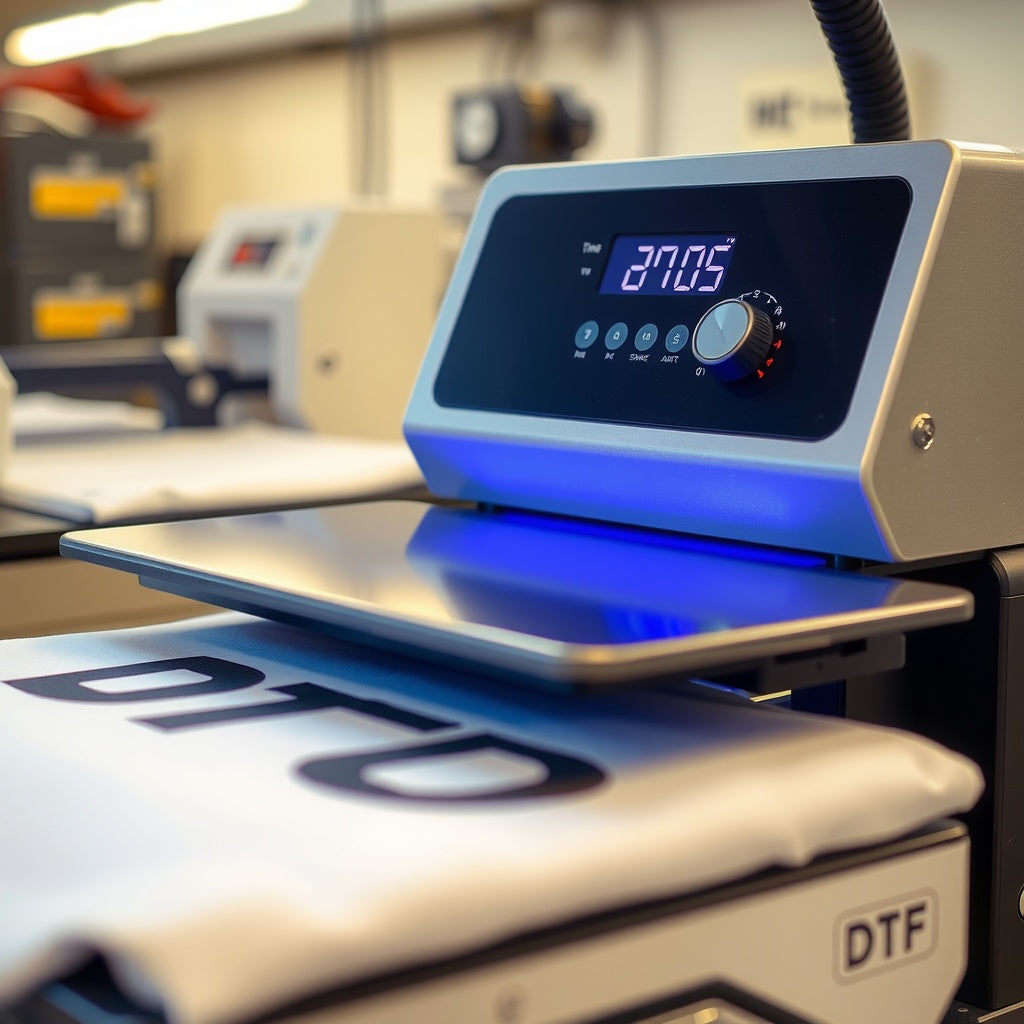
DTF Heat Press Settings: How to Use Transfer-Specific Instructions
There is no single temperature, time, pressure, or peel method that should be copied across every DTF transfer and garment. The correct process comes from the instructions supplied with the exact transfer, the garment's heat limits, and a press that is operating consistently.
The four application variables
Temperature
Temperature activates the transfer system, but the required condition depends on the transfer construction and garment. Too much heat can damage a garment or increase dye-migration risk; too little can lead to incomplete application. Use the transfer-specific value and verify the press according to its manufacturer's calibration guidance.
Time
Dwell time works together with temperature and pressure. Do not shorten or extend time simply because another transfer used a different recipe. Follow the supplied process and change it only when the supplier or verified troubleshooting guidance supports the adjustment.
Pressure
Pressure must be even across the design area. Thick seams, zippers, pockets, buttons, or a warped platen can change contact. Use the transfer's stated pressure guidance and the press manufacturer's method for setting or checking pressure.
Peel method
Hot, warm, and cold peel are not interchangeable. Peel when and how the transfer instructions specify. If the carrier resists unexpectedly, stop and recheck the process instead of forcing it.
Before pressing
- Identify the exact transfer and read its instructions.
- Check the garment material, coatings, seams, dye behavior, and heat limitations.
- Confirm the press is clean, level, and operating consistently.
- Position the garment so the transfer area sits flat.
- Test one representative sample before a production run.
How to verify a heat press
Use the calibration or verification method recommended by the press manufacturer. A control-panel number alone does not prove the entire platen is producing the same condition. If one section repeatedly applies differently from another, investigate the press rather than compensating with random setting changes.
Cotton, polyester, blends, nylon, denim, and other fabrics
Fabric type changes the risk profile, but it does not create a universal DTF setting table. Cotton styles can differ in dye and finish. Polyester can be vulnerable to dye migration. Nylon and technical fabrics can carry coatings. Denim can introduce thick seams and heavy construction. Rayon and other delicate fabrics can react to heat and pressure. In every case, the transfer-specific instructions and garment limits should control the process.
Pre-pressing
Pre-press only when the supplied application process or garment workflow calls for it. The purpose may be to flatten the area or address moisture, but unnecessary heat can also affect some fabrics. Do not treat a fixed pre-press duration as universal.
Post-pressing
Some transfer systems specify a second press after peeling; others may use a different finishing process. Follow the instructions for the exact transfer. A second press should not be added automatically just because an unrelated tutorial recommends it.
Troubleshooting edge lifting
If edges lift, stop before pressing the full run. Recheck the supplied instructions, platen consistency, pressure, garment surface, moisture, coatings, placement over seams, and peel timing. Do not blindly add heat or time.
Troubleshooting incomplete release
If the carrier does not release as expected, confirm that the correct peel method was used and that the application cycle matched the transfer instructions. Allow the transfer to reach the required peel condition before trying again.
Troubleshooting garment damage
Scorching, glazing, shrinking, texture change, or discoloration means the garment is reacting badly to the process. Stop and verify the garment's heat limitations and transfer compatibility before continuing.
Troubleshooting dye migration
Dye migration can occur on some polyester and sublimated garments when dye moves into the transfer under heat. The solution is not a universal lower-temperature number. Use a transfer and application process designed for the garment, test the exact color and style, and follow supplier guidance.
Unknown fabric or unfamiliar blank
Do not start from a generic internet setting. Identify the garment, check manufacturer information, confirm the transfer instructions, and test a sample. If compatibility remains unclear, contact the transfer supplier before production.
Household irons and handheld presses
Use these only when the exact transfer instructions permit them. A household iron does not automatically reproduce the controlled heat and pressure of a heat press. A handheld press also has different platen coverage and pressure characteristics.
Production checklist
- Transfer instructions available
- Garment identified and heat limits checked
- Press operating consistently
- Flat application area prepared
- Correct peel method confirmed
- Representative sample passed
- Operator process documented
- Unexpected results investigated before scaling
Common questions
What temperature should I use for DTF?
Use the temperature supplied with the exact transfer and confirm the garment can tolerate it. There is no reliable universal temperature for every DTF product.
How many seconds should I press?
Use the transfer-specific dwell time. Time cannot be chosen independently from the transfer, temperature, pressure, and garment.
Should DTF be hot peel or cold peel?
Follow the peel method specified for the transfer. Do not choose based only on fabric type or personal preference.
Can I compensate for a low temperature by pressing longer?
Do not invent compensating adjustments. If the prescribed process is not working, verify equipment and compatibility and contact the supplier.
Open the current DTF application guide · Use the heat-press checklist · Check fabric compatibility
InkMerge Pro
Need the transfer, not the shirt?
Browse ready-to-press DTF designs or upload your own artwork. Current product pricing and shipping details are shown on the product page and at checkout.