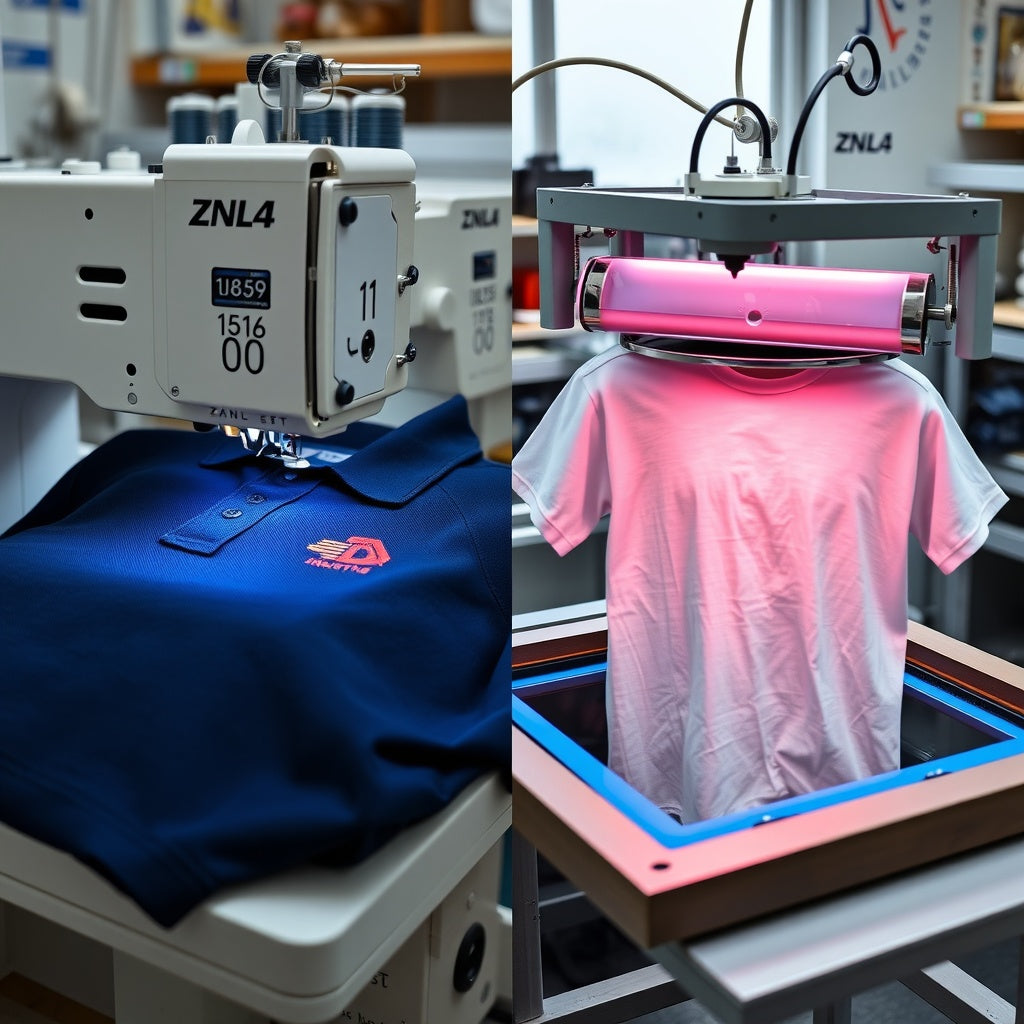
Embroidery vs Screen Printing: Which Is Better for Custom Apparel in 2026?
When it comes to custom apparel, the debate between embroidery and screen printing has raged for decades. Whether you are launching a brand, outfitting a sports team, or creating promotional garment designs for your business, choosing the right printing method can make or break your project.
By the end of this article, you will understand exactly when screen printing is best, when embroidery works best, and why DTF transfers are rapidly becoming the preferred customization method for businesses of all sizes.
What Is Screen Printing and How Does It Work?
Screen printing, also known as silk screening, is one of the oldest and most popular printing methods for custom apparel. Understanding the screen printing process is essential before comparing it to embroidery.
The Screen Printing Process Explained
Screen printing involves pushing ink through a mesh screen or stencil onto a garment. A unique stencil or mesh screen is created for each color in the design. The printer places the screen over the fabric and uses a squeegee to push ink through the mesh screen onto the material. Each color requires a separate screen, which is why setup costs increase with more colors.
The screen printing process works best for bold designs with limited colors. Since each stencil must be created individually, screen printing is best for large orders where the setup costs can be spread across many garments. This makes screen printing a cost-effective choice for bulk orders of t-shirts, hoodies, and other apparel.
Types of Screen Printing Inks and Techniques
Screen printing offers several ink options including plastisol, water-based, and discharge inks. Plastisol ink sits on top of the fabric and creates a bright, opaque finish. Water-based inks absorb into the garment for a softer feel. Discharge ink removes the dye from dark fabrics and replaces it with color, creating a vintage look.
Screen printing also offers specialty techniques like foil printing, puff ink for raised textures, and gradient effects. These design options make screen printing versatile despite its limitations with intricate details.
Best Applications for Screen Printing
Screen printing works best for large orders of custom t-shirts, promotional garment runs, event merchandise, and brand apparel. It excels at producing bold designs with bright colors on flat design surfaces. Screen printing can achieve excellent results on cotton, polyester blends, and various fabrics like denim and canvas.
Screen printing is best for orders of 24 or more identical pieces, making it cost-effective for large orders where the per-unit cost drops significantly.
What Is Embroidery and How Does It Work?
Embroidery is a premium customization technique that creates designs by stitching thread directly into fabric. The process of embroidery involves using an embroidery machine to stitch the design into the garment, creating a textured, high-quality finish.
How Machine Embroidery Works
Modern embroidery involves using a computerized embroidery machine that reads a digitized design file and automatically stitches the pattern onto the fabric. The embroidery machine uses a needle and thread colors to create the embroidered design by stitching the design directly onto the fabric.
Embroidery involves converting artwork into a stitch file through a process called digitizing. Each element of the design requires a specific stitch type — satin stitch for borders, fill stitch for larger areas, and running stitch for fine lines. The quality of the digitized file directly affects how the embroidered logo or embroidery designs will look on the finished garment.
Thread Types and Stitch Patterns
Embroidery uses various thread colors and materials including polyester, rayon, and metallic threads. The number of thread colors in a design affects both the complexity and cost. Most embroidery designs use between 1 and 15 thread colors.
Common stitch types include satin stitch for smooth borders, tatami or fill stitch for covering large areas, and cross-stitch for decorative effects. The stitch count — the total number of stitches in a design — determines production time and cost per item.
Best Applications for Embroidery
Embroidery works best for corporate apparel, polo shirts, jackets, hats, and work shirts where a polished, professional appearance is essential. An embroidered logo on a polo or jacket conveys quality and brand prestige that printing methods simply cannot match.
Embroidery is best suited for smaller designs like logos, monograms, and text. It excels on structured garments and heavier fabrics like denim, canvas, and fleece. Embroidery is ideal for branding that needs to withstand frequent washing while maintaining a premium look.
Embroidery vs Screen Printing: Cost Comparison
One of the most important factors when choosing between embroidery and screen printing is cost. Both methods have different pricing structures that make one more cost-effective than the other depending on your order size and design complexity.
Screen Printing Costs and Setup Fees
For bulk orders, the cost per unit drops significantly. A single-color screen print on a t-shirt might cost $5-8 per unit for 24 pieces but drop to $2-4 per unit for 200+ pieces. Screen printing offers the lowest cost per unit for large volume orders.
Embroidery Costs and Stitch Count Pricing
Embroidery pricing is typically based on stitch count rather than color count. A simple embroidered logo with 5,000 stitches might cost $5-8 per piece, while a complex embroidered design with 15,000+ stitches could run $10-20 per piece. Unlike screen printing, embroidery costs remain relatively consistent regardless of order size.
Setup costs for embroidery include digitizing the design file, which typically costs $30-100 depending on complexity. However, once digitized, the file can be reused indefinitely, making embroidery depends on long-term value for repeat orders.
When Each Method Is More Affordable
Screen printing is best for budget-conscious projects with large orders of identical designs. The more pieces you order, the lower your cost per unit. For bulk orders of 100+ pieces with simple designs, screen printing may cost 50-70% less than embroidery.
Embroidery is more cost-effective for smaller orders where screen printing setup costs cannot be amortized. For orders under 12 pieces with small logo designs, embroidery often works out cheaper. Embroidery also offers better value when you need designs with multiple thread colors on premium garment types like jackets and polo shirts.
Durability and Quality: Screen Printing vs Embroidery
Durability is a critical factor when choosing between screen printing and embroidery. How well your custom apparel holds up over time and through frequent washing directly impacts customer satisfaction and brand perception.
How Long Does Screen Printing Last?
Screen printing durability depends on the type of ink used and the curing process. Properly cured plastisol screen prints can last 50+ washes without significant fading. Water-based ink prints may fade slightly faster but offer a softer hand feel.
However, screen printing can crack or peel over time, especially on designs that cover large areas. High-quality screen printing uses proper ink layering and curing temperatures to maximize durability. Screen printing may show wear after extensive stretching and frequent washing, particularly on performance fabrics.
How Long Does Embroidery Last?
Embroidery is durable and stands as one of the most long-lasting customization methods available. Since embroidery involves stitching the design directly into the fabric, it resists fading, peeling, and cracking. A well-executed embroidered design can outlast the garment itself.
Embroidery excels at withstanding frequent washing, making it ideal for work shirts, uniforms, and apparel that sees daily wear. The stitched texture actually improves with gentle washing as threads soften and settle into the fabric.
Quality Perception and Professional Appearance
Embroidery offers a premium, three-dimensional texture that conveys professionalism and high-quality craftsmanship. An embroidered logo on a polo or jacket immediately signals polish and attention to detail. This makes embroidery the preferred choice for corporate branding, upscale merchandise, and professional uniforms.
Screen printing offers a smooth, flat design finish that works well for casual apparel, event merchandise, and promotional items. While high-quality screen prints look excellent, they do not carry the same perception of luxury as embroidery.
Design Capabilities: What Can Each Method Achieve?
The design capabilities of embroidery and screen printing differ significantly, and understanding these limitations is crucial when choosing between the two printing methods.
Color and Detail Limitations in Screen Printing
Screen printing can achieve bright, bold designs with excellent color reproduction. It handles gradient effects and color transitions well, especially with halftone techniques. Screen printing allows designers to use an unlimited range of ink colors, though each additional color adds to setup costs.
Screen printing also offers full-color process printing (CMYK) for photorealistic designs, though this technique requires specialized equipment and expertise. Screen printing can achieve detailed designs on larger design areas, making it ideal for full-front and full-back apparel prints.
Color and Detail Limitations in Embroidery
Embroidery designs are limited by stitch type and thread density. Fine details, small text below 6pt, and gradient or photorealistic images are difficult to achieve with embroidery. Embroidery works best for simple logo designs, text, and graphics with clean lines.
Embroidery products typically look best when the design area is kept under 12 inches. Larger designs increase stitch count, production time, and cost. Intricate designs with many small elements may lose clarity when converted to embroidery stitch files.
Design Flexibility and Customization Options
Screen printing offers greater flexibility for large, detailed designs and full-color artwork. If your design requires photorealistic images, complex designs, or bold designs with many colors, screen printing allows more creative freedom.
Embroidery offers unique customization through special thread types (metallic, glow-in-the-dark), three-dimensional puff embroidery, and appliqué techniques. Custom embroidery also allows personalization — individual names or numbers can be added to each garment in the same run, which screen printing cannot easily accommodate.
Best Fabrics and Garments for Each Method
Not all fabrics like cotton and polyester respond the same way to embroidery and screen printing. Choosing the right method often comes down to the type of garment you are decorating.
Best Garments for Screen Printing
Screen printing works best on flat, smooth fabrics that allow ink to transfer evenly onto the fabric. Cotton t-shirts are the most popular choice for screen printing, but the method also works well on polyester blends, sweatshirts, tote bags, and canvas items.
Screen printing is ideal for t-shirts, hoodies, tank tops, and any garment with a large, flat printable area. The ink sits on the fabric surface, so screen printing also works well on lighter-weight materials where embroidery might cause puckering.
Best Garments for Embroidery
Embroidery works best on structured, heavier fabrics that can support the weight and density of stitched thread. Polo shirts, jackets, hats, denim garments, fleece jackets, and work shirts are ideal candidates for embroidery.
Embroidery is best suited for garments where a professional, polished appearance matters. Corporate polo shirts, team jackets, chef coats, and medical scrubs all benefit from the premium look that an embroidered logo provides. Fabrics like piqué cotton, twill, and fleece hold embroidery stitches beautifully.
Fabric Considerations and Limitations
Some fabrics present challenges for both methods. Stretchy performance fabrics can distort both screen prints and embroidery. Sheer or very lightweight fabrics may not support dense embroidery without stabilizer backing.
Screen printing may have adhesion issues on certain synthetic fabrics without proper ink selection. Embroidery on delicate fabrics requires careful stabilization to prevent puckering. Understanding these fabric-specific considerations helps ensure your custom apparel looks professional regardless of the decoration method.
Order Size and Turnaround Time Considerations
The size of your order and how quickly you need it significantly impact whether embroidery or screen printing is the better choice for your project.
Screen Printing for Bulk Orders
Screen printing is the undisputed champion for bulk orders. Once the screens are set up, production moves quickly — experienced screen printers can produce hundreds of garments per hour. This makes screen printing the most cost-effective for large orders of 50 to thousands of identical pieces.
Turnaround times for screen printing typically range from 5-10 business days for standard orders. Rush orders may be available at premium pricing. The actual printing takes minutes per garment, but screen setup, artwork preparation, and curing add to the overall timeline.
Embroidery for Small and Custom Runs
Embroidery is better suited for smaller orders and personalized runs. Since there are no screens to set up, embroidery can handle orders as small as one piece efficiently. This makes embroidery ideal for individual gifts, sample orders, and small team outfitting.
Turnaround times for embroidery depend on stitch count and order size. Simple designs on small orders can be completed in 3-5 business days. However, large embroidery orders take longer than equivalent screen printing jobs because each piece must be individually hooped and stitched.
Choosing Based on Your Project Timeline
For time-sensitive projects with large quantities, screen printing offers faster overall production. For rush orders of smaller quantities with simpler designs, embroidery may actually be quicker since it requires less setup time.
Planning ahead is essential for both methods. Last-minute orders often incur rush fees and may limit your options for design changes. Consider your timeline alongside your budget and design requirements when choosing between embroidery and screen printing.
When to Choose Screen Printing Over Embroidery
Understanding the specific scenarios where screen printing offers clear advantages helps you make informed decisions for your custom apparel projects.
Large Volume Orders with Identical Designs
Screen printing is best for orders of 24+ pieces featuring the same design. The economics of screen printing heavily favor volume — the more pieces you print, the lower your per-unit cost. Event merchandise, promotional giveaways, and wholesale t-shirt production are all perfectly suited for screen printing.
For annual events like 5K runs, festivals, or company picnics where you need hundreds of identical garments, screen printing delivers the best value and fastest turnaround.
Designs with Gradients, Photos, or Large Print Areas
If your design requires gradient effects, photorealistic images, or large print areas covering the full front or back of a garment, screen printing is your best option. Unlike screen printing, embroidery cannot reproduce photographic detail or smooth color transitions.
Screen printing also excels at special effects like metallic inks, glow-in-the-dark finishes, and textured prints that add visual impact to your custom designs.
Budget-Conscious Projects
When budget is the primary concern and order quantities are moderate to large, screen printing offers the lowest cost per unit. The combination of fast production speed and low per-piece pricing makes screen printing the go-to choice for organizations watching their bottom line.
Compared to screen printing, embroidery costs more per unit for most order sizes, making screen printing the clear winner for price-sensitive projects.
When to Choose Embroidery Over Screen Printing
There are many scenarios where embroidery is clearly the superior choice. Knowing when embroidery is ideal helps you invest wisely in custom apparel that meets your goals.
Professional and Corporate Branding
Embroidery is best suited for professional environments where brand image matters most. An embroidered logo on polo shirts, dress shirts, and jackets communicates quality and attention to detail that screen printing cannot match.
Corporate uniforms, executive gifts, and client-facing apparel benefit enormously from the premium look of embroidery. The tactile, three-dimensional quality of embroidered designs reinforces brand prestige and professionalism.
Small Orders and Personalized Items
For small orders of 1-12 pieces, embroidery often makes more economic sense than screen printing because there are no screen setup costs. Embroidery also offers easy personalization — different names, titles, or numbers can be added to each piece without additional setup fees.
This makes embroidery ideal for team jackets with individual names, personalized gifts, and small business starter kits where each item may differ slightly.
Maximum Durability Requirements
When long-lasting designs are the priority, embroidery offers superior durability. Work uniforms, outdoor gear, and apparel subjected to industrial washing benefit from embroidery's resistance to fading, peeling, and cracking.
Embroidery is durable enough to outlast the garment itself, making it the preferred choice for high-wear applications. For businesses that need their branding to remain sharp through years of daily use and frequent washing, embroidery delivers unmatched longevity.
DTF Transfers: A Modern Alternative to Both Methods
While choosing between embroidery and screen printing has been the traditional dilemma, Direct-to-Film (DTF) transfers have emerged as a important third option that solves many of the limitations of both methods.
What Are DTF Transfers and How Do They Compare?
DTF (Direct-to-Film) printing uses a special ink transfer process where designs are printed onto a film and then transferred onto the fabric using heat and pressure. Unlike screen printing, DTF requires no screens, stencils, or color separation. Unlike embroidery, DTF can reproduce photorealistic images, intricate details, and unlimited colors with ease.
DTF transfers combine the full-color capability of screen printing with the low minimum order flexibility of embroidery — all while delivering excellent durability through frequent washing cycles.
Why DTF Transfers Are Gaining Popularity
DTF transfers offer several advantages over both screen printing and embroidery. There are no setup costs or minimum order requirements, making DTF cost-effective for orders of any size. DTF prints are bright, detailed, and durable, lasting 50+ washes without cracking or fading.
DTF vs Embroidery vs Screen Printing: Quick Comparison
Here is how all three methods stack up. Screen printing offers the lowest cost per unit for bulk orders but requires setup costs and minimum quantities. Embroidery offers premium durability and professional polish but is limited to simple designs and small design areas. DTF transfers offer unlimited colors, no minimums, fast turnaround, and excellent durability — bridging the gap between both traditional methods.
A Third Option: DTF Transfers
For Etsy and small-shop sellers running 1 to 50 pieces with detailed designs, DTF transfers are often the right answer. For corporate uniforms requiring tactile feel and longevity, embroidery still wins. For runs of 500+ identical pieces, screen printing edges out on cost. Pick the right tool — InkMerge is best for the small-batch, high-detail use case.
Frequently Asked Questions
Is embroidery or screen printing better for t-shirts?
Screen printing is generally better for t-shirts because it is a printing method that uses ink pushed through screens to create high-quality designs on flat fabric surfaces. Embroidery on t-shirts is limited to small logo placements. However, DTF transfers offer the best of both — full-color designs with no size limitations and a soft hand feel on any t-shirt fabric.
Which is more durable, embroidery or screen printing?
Embroidery is more durable than screen printing for most applications. One of the key advantages of embroidery is that it involves stitching the design directly into the fabric, so it resists fading, peeling, and cracking through frequent washing. Screen printing can crack or peel over time, especially with heavy use. DTG printing and DTF transfers also offer excellent durability comparable to screen printing.
Is embroidery more expensive than screen printing?
It depends on order size and design complexity. In the case of screen printing, costs decrease as order size increases because setup fees are spread across more units. Embroidery is typically more expensive per piece for large orders because each garment must be individually stitched. However, for small orders under 12 pieces, embroidery can actually be cheaper because there are no screen setup costs.
Can you combine embroidery and screen printing on one garment?
Yes, combining embroidery and screen printing on one garment is possible and can create stunning effects. For example, you might screen print a large back design while adding an embroidered logo on the front chest. This approach uses the strengths of both printing methods for maximum visual impact.
What is the difference between screen printing and embroidery for logos?
The main differences between screen printing and embroidery for logo design are texture, durability, and design complexity. An embroidered logo has a raised, textured feel that conveys premium quality, while a screen-printed logo is flat and smooth. Embroidery works best for simple logo designs, while screen printing handles complex designs with many colors better.
Is screen printing or embroidery better for small businesses?
What is the minimum order for screen printing vs embroidery?
Screen printing typically requires a minimum order of 12-24 pieces to justify the setup costs for each screen. Embroidery usually has lower minimums, often starting at just 1 piece since no screens are needed. DTF transfers from InkMerge have no minimum order requirements at all, making them ideal for any order size.
Which printing method is best for custom apparel businesses?
The best printing method depends on your business model. Screen printing is best for high-volume, identical designs. Embroidery is best for premium branded apparel. DTF transfers are best for versatile businesses that need flexibility across different order sizes and design types. Many successful apparel businesses use a combination of all three methods to serve different customer needs.
Choosing between embroidery and screen printing ultimately depends on your specific needs — order size, design complexity, budget, garment type, and desired appearance. Screen printing excels at high-volume, colorful designs on t-shirts and casual apparel, while embroidery delivers premium quality for corporate branding and professional garments.