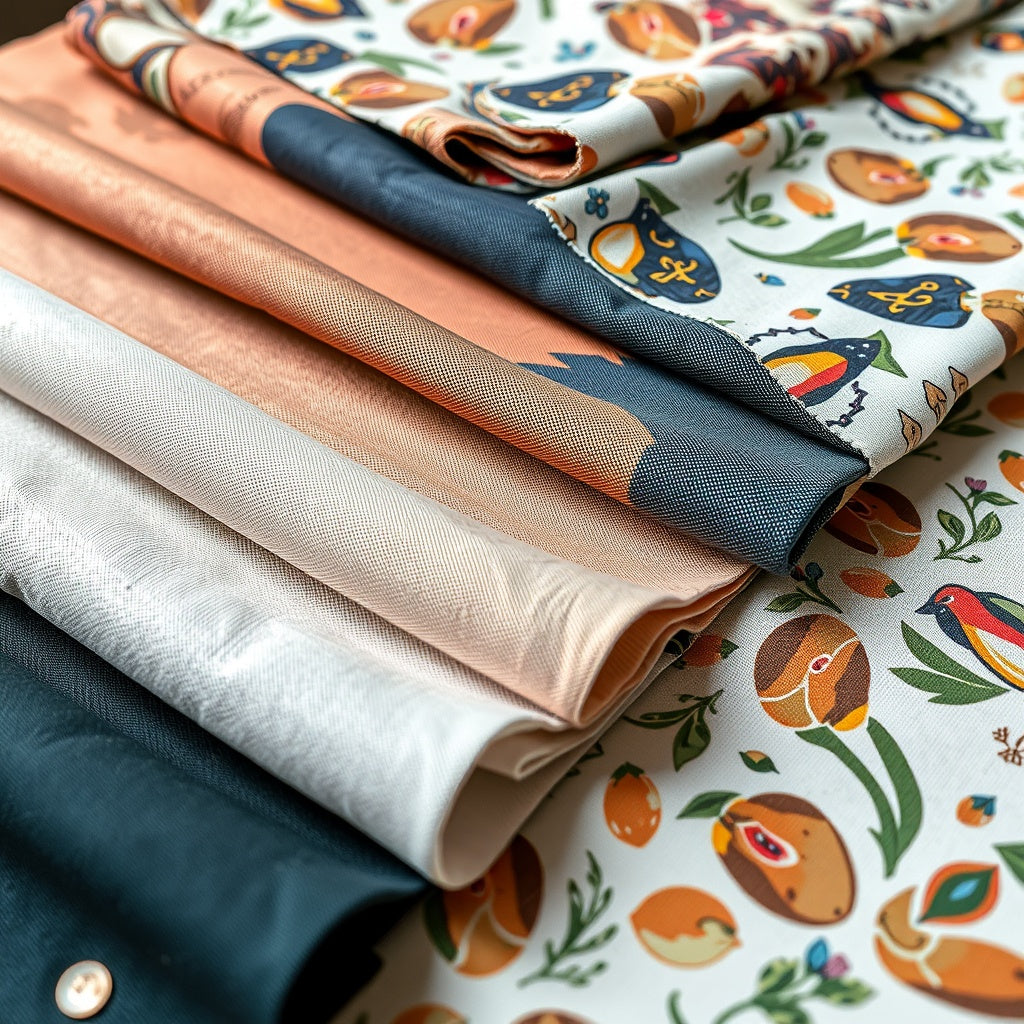
Best Fabrics for DTF Transfers: Compatibility Guide
DTF transfers can be used on many textile products, but fabric type alone does not guarantee compatibility. The exact garment construction, dye, coating, stretch, surface texture, heat tolerance, transfer construction, and application instructions all matter.
Start with the garment label and manufacturer information
Identify the fiber content, garment style, coatings or performance finishes, and any manufacturer heat limitations before pressing. Two garments with the same fiber percentages can still react differently because their dyes, finishes, weights, and construction are not identical.
Cotton
Cotton garments are commonly used for DTF projects because many styles provide a relatively flat print surface. That does not make every cotton garment interchangeable. Garment-dyed colors, heavy texture, seams, moisture, and specialty finishes can affect the result. Follow the transfer-specific instructions and test the exact blank.
Cotton-polyester blends
Blends combine characteristics of both fibers. The polyester component can introduce dye-migration or heat-sensitivity concerns on some garments, while the cotton component can change the surface feel and moisture behavior. Verify the exact style instead of choosing settings from the blend percentage alone.
Polyester and performance fabrics
Polyester garments can be suitable for DTF, but they deserve careful testing. Some dyes can migrate under heat, and lightweight performance fabrics or moisture-management finishes may react differently from basic T-shirt polyester. Check garment heat tolerance and test for discoloration, glazing, shrinking, or dye movement.
Nylon and coated synthetics
Nylon and other technical fabrics can vary widely. Water-resistant coatings, durable-water-repellent finishes, stretch treatments, or slick surfaces can reduce adhesion or react to heat. Do not assume a transfer intended for ordinary cotton or polyester is automatically suitable for nylon.
Denim
Denim can provide a stable surface, but seams, heavy construction, washes, coatings, stretch content, and indigo dye can affect pressing. Keep the design on a flat area when possible and test the exact denim style before production.
Rayon, viscose, and delicate fabrics
Rayon and viscose garments can be sensitive to heat, pressure, moisture, and surface distortion. Use only a transfer and process compatible with the exact garment, and test for shine, scorching, dimensional change, or texture damage.
Linen and textured natural fabrics
Linen and other textured fabrics can create uneven contact if the surface is heavily wrinkled or loosely constructed. Check the garment's heat limitations and test the transfer on the same material and finish you intend to sell.
Stretch fabrics
High-stretch garments create a different mechanical demand from a standard T-shirt. The decorated area can flex repeatedly during wear. Confirm that the transfer is designed for the required movement, avoid placing artwork across extreme-stretch zones when possible, and test the garment through normal use.
Coatings and specialty finishes
Water-resistant, waxed, silicone-treated, stain-resistant, reflective, laminated, and other specialty surfaces can interfere with adhesion or react to heat. Treat an unfamiliar coating as a reason to stop and verify compatibility rather than increasing heat or pressure.
Dye migration
Dye migration is most often associated with some polyester garments, especially darker or sublimated products. It can appear as garment dye moving into lighter areas of the transfer. The risk depends on the garment dye system, transfer construction, and application conditions. Test the exact garment and follow supplier guidance instead of using a universal low-temperature recipe.
Seams, pockets, zippers, and uneven areas
Even a compatible fabric can fail when the platen cannot apply even contact. Thick seams, pockets, zippers, buttons, drawcords, and raised construction can change pressure across the transfer. Choose a flat area or use equipment and accessories specifically designed for the application.
How to test a new fabric
- Use the exact garment style and color planned for production.
- Confirm the transfer-specific application instructions.
- Inspect the garment for coatings, seams, and heat-sensitive details.
- Apply one sample using the documented process.
- Check release, edges, surface appearance, garment color, stretch, and damage.
- Follow the intended care instructions through normal laundering or use.
- Document the garment, transfer, press, settings, and result before scaling.
Do not “fix” a failed test blindly
If an edge lifts or release is inconsistent, do not automatically add more temperature, time, or pressure. Recheck press calibration, garment compatibility, transfer instructions, moisture, coatings, and the peel method first.
Fabric compatibility checklist
- Exact fiber content identified
- Garment style and color confirmed
- Manufacturer heat limits reviewed
- Coatings and finishes checked
- Dye-migration risk considered
- Flat application area available
- Transfer-specific instructions available
- Representative sample tested
- Normal care test documented
Common questions
What is the best fabric for DTF?
There is no universal best fabric. Choose a garment whose surface, heat tolerance, construction, and intended use work with the exact transfer and application process.
Can DTF work on polyester?
It can on suitable garments, but polyester deserves testing for heat sensitivity and dye migration. Follow the transfer instructions and garment limits.
Can DTF work on nylon?
Only when the exact transfer and garment are compatible. Nylon coatings and finishes can make adhesion unpredictable, so verify before production.
Should I use a fabric-specific temperature chart from the internet?
No. The transfer-specific instructions and garment heat limits should control the process. A generic chart cannot account for every adhesive, garment dye, coating, or press.
Read DTF application guidance · Compare blank T-shirts · Compare dark and light garments
InkMerge Pro
Need the transfer, not the shirt?
Browse ready-to-press DTF designs or upload your own artwork. Current product pricing and shipping details are shown on the product page and at checkout.